




A Bitter Holiday for a Sweet Treat
As the 2025 holiday season approaches, the chocolate industry is entering one of its most challenging periods in recent memory. Many consumers anticipate festive favourites, indulgent bars and luxury gifting sets. Yet behind the cheerful façades and glossy packaging lies a sobering reality: cocoa supplies are severely constrained, and producers, manufacturers and retailers are scrambling to adapt.
Supply crunch at the heart of the problem
At the centre of the turmoil is the supply of cocoa — the essential raw commodity for chocolate. The main growing regions in West Africa, particularly Côte d’Ivoire and Ghana, which together account for around 60-70 % of world cocoa production, have suffered a perfect storm of adverse weather, disease and structural challenges. In turn, this has driven cocoa futures and wholesale prices to historical highs. For example, global cocoa production fell by 12.9 % to 4.37 million tons in one season, resulting in a deficit of nearly 494,000 tons — the largest in over six decades.
With cocoa so tight, manufacturers are under intense pressure. They must secure supply well ahead of the holiday rush, manage the increased cost of beans, and anticipate rising packaging, logistics and labour expenses.
Holiday timing means elevated stakes
Why does this matter, especially for the holiday season? Because this is when chocolate sales traditionally surge. Seasonal gifting, festive collections, advent calendars, special shapes and limited-edition boxes all drive higher volumes and premium pricing. A disruption here doesn’t just affect a single product: it ripples across supply chains, marketing plans and consumer expectations.
Consequently, many chocolate makers are already signalling action: budget for higher raw costs, reduce the number of seasonal SKUs, or shrink pack sizes (“shrinkflation”) while keeping sticker prices steady. For consumers, the experience may be subtle (smaller bars, fewer flavour variants) or more direct (higher prices, or less availability of certain items).
Consumer–facing implications
For shoppers in the holiday season, the consequences are multifold:
- Higher prices: With cocoa costs passed on down the line, some products will simply cost more. For example, commentary suggests that chocolate prices for Halloween in the U.S. had already risen significantly — and the holiday season for Christmas may be similarly impacted.
- Smaller or altered products: Manufacturers may keep retail sticker-prices stable but reduce content, change formulation (less cocoa, more substitutes), or limit special-edition lines.
- Reduced variety: To manage risk and cost, companies may cut back on special seasonal items, fewer flavours, less extravagant packaging or less innovation this year.
- Shift in gifting behaviour: Some consumers may trade down (choosing less premium options), buy fewer units, or move to non-chocolate alternatives or other treats altogether.
What manufacturers and retailers are doing
Faced with this scenario, the industry is adapting in several ways:
- Advance procurement and hedging: Many major players are locking in cocoa contracts early to mitigate further price rises or supply shortfalls.
- Change in product mix: There’s a shift towards more premium chocolates (which can absorb cost rises) and fewer mass-market big-volume lines with tight margins.
- Reformulation: Some products may use slightly less cocoa content or more cost-efficient ingredients (though this risks shifting consumer perception).
- Communicating scarcity as premiumisation: Some brands may turn the supply issue into a story of exclusivity — “limited availability”, “special run for 2025” — which might justify higher price points to gifting purchasers.
- Inventory and logistics caution: Retailers are being mindful of overstock or mis-forecasting. With supply risk high, many will reduce seasonal complexity to avoid expensive leftover inventory or out-of-stock situations.
Cocoa Prices and Supply Deficit, 2020–2025
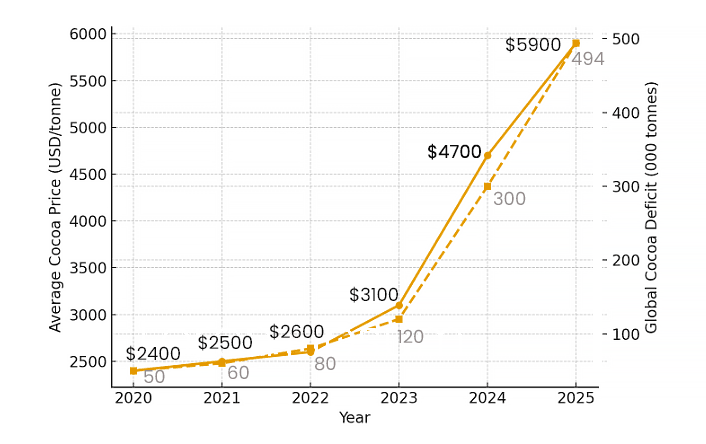
Prices climb steeply after 2023 while the deficit widens dramatically — signalling the “bittersweet” tension of holiday 2025.
Long-term considerations
While the holiday crunch is immediate and acute, the structural issues behind it may persist. Ageing cocoa trees, outbreak of pests and diseases, climate change impacts in major growing regions, and limited expansion capacity mean supply remains vulnerable. The outcome: what was once a “nice-to-have” indulgence could become a more premium, less mass-market item over time.
For holiday 2025, then, the message is: be prepared for a chocolate season that might cost more, offer fewer options and carry a new narrative of scarcity rather than abundance.
Take-aways for consumers & industry watchers
- If you’re buying seasonal chocolate gifts this year, anticipate higher prices and consider purchasing earlier rather than later.
- Keep an eye on pack sizes and formulation changes: what looks like the same bar may contain less.
- For chocolate brands and retailers: this is a moment to rethink seasonal strategies, emphasise premium or ethical variants, and build supply-chain resilience.
- For cocoa producers and origin-region stakeholders: this holiday season is a wake-up call to invest in productivity, tree-renewal, disease-resistance and diversification.
As the holiday lights go up for December 2025, the chocolate aisles may look familiar — but the story behind them is changing. This will be a season when supply constraints meet consumer expectations, and the “sweet treat” of chocolate comes with a sharper edge.