



Why Cherry Blossom Chocolate Is Disappearing
A Bittersweet Goodbye
In Canada, certain foods transcend their role as mere products and become part of cultural memory. For many, one such treat is the Cherry Blossom chocolate — a confection that stood out in a sea of mass-market bars with its messy, gooey centre and unmistakably retro charm. Yet in 2025, longtime fans have noticed an unsettling change: Cherry Blossom is quietly disappearing from shop shelves.
Hershey Canada confirmed in early 2025 that the chocolate would no longer be produced, ending decades of tradition. By autumn, the familiar red-and-yellow packaging had all but vanished, with a handful of remaining boxes selling at inflated prices online. For a generation of Canadians who grew up with this quirky classic, its disappearance feels like losing a small piece of history.
A Confection Steeped in Nostalgia
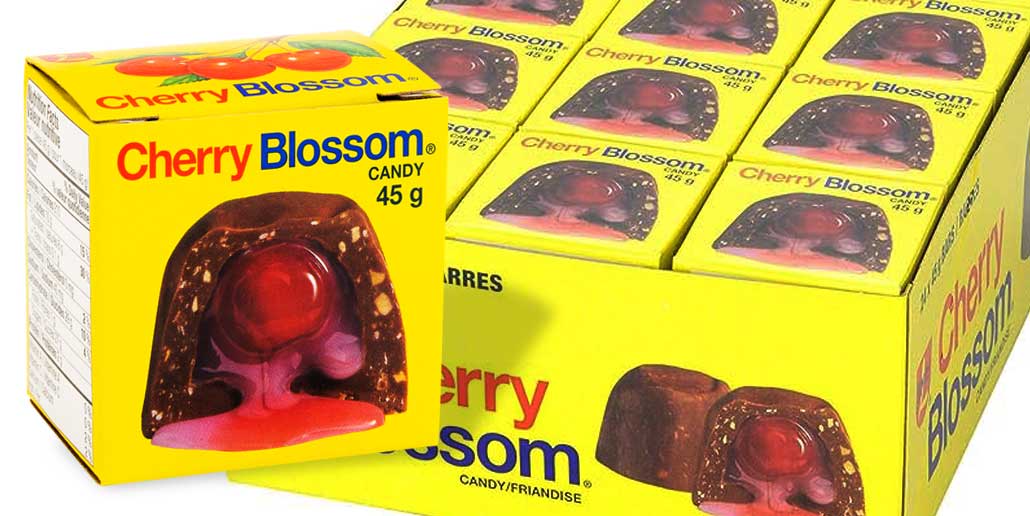
Cherry Blossom has always been a polarising sweet, but for those who loved it, nothing else compared. Each piece featured a whole cherry suspended in syrup, surrounded by a blend of coconut and roasted peanut bits, all encased in chocolate. Unlike the neatly portioned bars that dominate supermarket aisles, it came as a single, indulgent serving — sticky, sweet, and unapologetically messy.
For decades, Cherry Blossom was more than a treat; it was a ritual. Some remember unwrapping one at Halloween, where it stood apart from the endless parade of fun-size chocolate bars. Others recall buying it on family road trips, from corner shops, or as a small holiday indulgence tucked into stockings. It was never the trendiest choice, but it offered something that mass-market products rarely deliver: distinctiveness.
The Announcement: Hershey Pulls the Plug
In January 2025, Hershey Canada made it official: Cherry Blossom would be discontinued. The announcement received little fanfare, but the reaction among loyal fans was swift. Social media posts mourned the end of an era, while nostalgic shoppers rushed to scoop up any remaining stock.
By late 2025, most major retailers had sold out completely. Independent grocers and online resellers, recognising demand, saw prices surge well above retail value. A box that once cost only a few dollars suddenly carried a collector’s premium, with fans buying not just to eat but to preserve as a piece of Canadian confectionery history.
Why Did Cherry Blossom Disappear?
The official statement offered no detailed explanation, but several factors likely contributed to the decision.
- Rising Production Costs
The unique recipe required multiple components — cherry syrup, nuts, coconut, chocolate — making it more expensive to produce than a simple bar. At a time when cocoa prices and material costs are soaring worldwide, such complexity becomes less sustainable. - Niche Appeal
While Cherry Blossom had its devoted fans, its flavour profile was divisive. Not everyone enjoys a syrup-soaked cherry in the middle of their chocolate, and compared to mainstream offerings like Kit Kat or Reese’s, its market share was modest. - Portfolio Consolidation
Multinational companies such as Hershey often streamline their product lines to focus on high-volume, high-margin items. In this climate, smaller nostalgic products with limited growth potential are the first to go.
Together, these factors created a perfect storm. In an era of inflation and global supply challenges, Cherry Blossom was simply too quirky and costly to justify its place on shelves.
What the Loss Means for Canadian Chocolate Lovers
For everyday consumers, the disappearance of one chocolate might seem minor. But for those who grew up with Cherry Blossom, the loss feels personal. Its absence means:
- Less variety in seasonal and specialty offerings. Halloween baskets and holiday stockings lose a unique texture and flavour that broke up the monotony of mainstream treats.
- A cultural gap, especially for older generations who associate Cherry Blossom with childhood memories, family traditions, or simple indulgence.
- An opportunity for boutique makers, who may experiment with recreating similar cherry-filled confections to satisfy lingering demand. Smaller chocolatiers, unburdened by mass-production economics, could seize the chance to revive a niche market.
The reaction also highlights how food products can carry meaning beyond their taste. They become symbols of time, place, and identity. For some, Cherry Blossom represented a bridge between Canada’s confectionery past and present.
A Wider Trend in Confectionery
Cherry Blossom’s discontinuation is not an isolated event. Across the global chocolate industry, brands are cutting back on low-volume products to reduce costs. Rising cocoa prices, supply chain challenges, and changing consumer preferences are reshaping product lines everywhere.
Specialty or nostalgic items — once considered safe “heritage products” — are now vulnerable. Companies are increasingly ruthless about cutting products that don’t perform strongly in the market. This leaves consumers with fewer eccentric options and more standardised offerings.
At the same time, consumer demand itself is shifting. Younger generations often gravitate toward premium, artisanal chocolates, plant-based alternatives, or products marketed as sustainable and ethically sourced. In that landscape, an old-fashioned cherry-and-syrup centre may have struggled to keep its relevance.
Holding On to the Memories
The end of Cherry Blossom serves as a reminder that food is never just about sustenance. It carries stories, evokes nostalgia, and connects people to their past. Fans who loved the chocolate will remember it not simply for its taste but for the moments attached to it — whether sneaking one after dinner, sharing it with friends, or receiving it as a treat from grandparents.
While the product itself may no longer be mass-produced, its memory endures. The rise of online recipe blogs and confectionery hobbyists suggests that Cherry Blossom might live on through homemade versions, or perhaps as inspiration for future Canadian chocolatiers to reimagine the idea in a new way.
When Classics Fade
Cherry Blossom’s disappearance is bittersweet — a quirky, nostalgic treat slipping quietly into history. Its end reflects larger forces in the chocolate industry: rising costs, shifting consumer tastes, and the relentless drive for efficiency. Yet it also underlines how chocolates, however small, are woven into personal and cultural memory.
For Canadian chocolate lovers, losing Cherry Blossom feels like losing a piece of identity. Whether boutique chocolatiers step in to revive its spirit or it remains a fond memory, its story reminds us that food is never “just food.” It is heritage, nostalgia, and emotion — and in today’s volatile market, only the most adaptable or universally beloved will survive.