



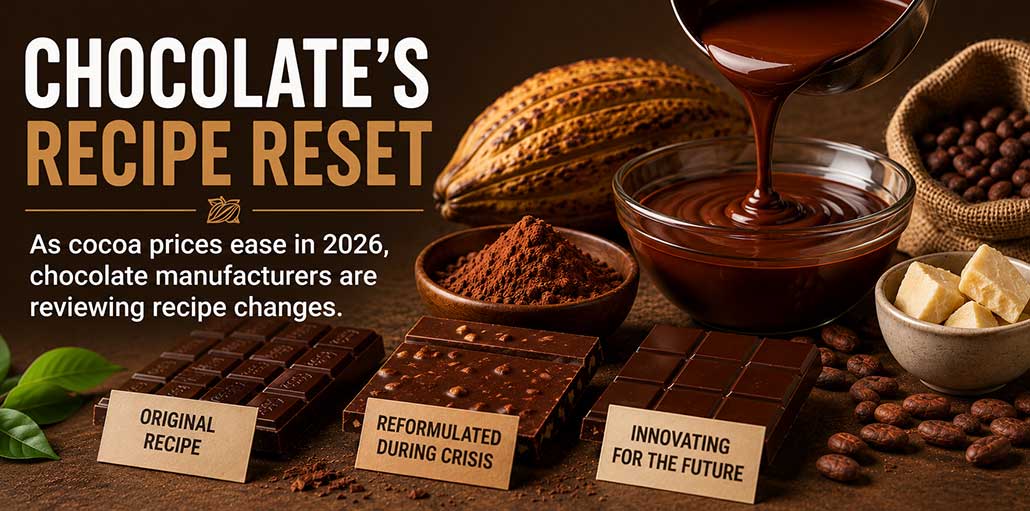
Chocolate Manufacturers Are Reassessing Reformulations
The cocoa crisis of 2024 and 2025 forced chocolate manufacturers around the world to make difficult decisions. Faced with record-breaking cocoa prices and ongoing supply concerns, many confectionery companies reformulated products, adjusted recipes and explored alternative ingredients to protect margins and maintain production.
Now, as cocoa markets begin to stabilise in 2026, the industry is taking a fresh look at those changes. Some manufacturers are considering a return to traditional chocolate recipes, while others are evaluating whether the reformulations introduced during the crisis offer long-term benefits.
The debate has become one of the most closely watched developments in the global chocolate trade.
How the Cocoa Crisis Changed Chocolate
When cocoa prices surged to historic highs, manufacturers had limited options. Many companies could not simply absorb the increased costs without affecting profitability.
As a result, some brands reduced cocoa content in selected products, while others introduced alternative vegetable fats to replace a portion of cocoa butter. Several companies also experimented with cocoa-reduced or even cocoa-free ingredients designed to mimic chocolate flavours and textures.
These adjustments varied widely across the industry. Premium chocolate producers generally worked to preserve traditional recipes, while some mass-market manufacturers sought creative ways to manage costs without significantly impacting consumer perception.
In many cases, the changes were subtle enough that consumers barely noticed. However, for chocolate enthusiasts and industry professionals, the shift highlighted how vulnerable chocolate production can be to fluctuations in cocoa supply.
The Return of Traditional Recipes
With wholesale cocoa prices falling significantly from their peak levels, some manufacturers are now signalling a return to more familiar formulations.
Several companies have publicly acknowledged that the recipe adjustments made during the height of the crisis were intended as temporary measures. As supply conditions improve, they are exploring opportunities to restore original ingredient ratios and product specifications.
One of the most notable examples comes from Hershey, which has indicated plans to move back toward traditional chocolate formulations as cocoa availability improves.
For many brands, returning to original recipes is about more than ingredient lists. It is also an opportunity to reinforce commitments to quality, authenticity and consumer trust.
Chocolate remains an emotionally driven purchase, and consumers often associate specific products with familiar flavours and experiences. Manufacturers understand that maintaining those expectations is critical to long-term brand loyalty.
Not Every Reformulation Will Disappear
Despite improving market conditions, not all recipe changes are expected to be reversed.
Some reformulations introduced during the cocoa crisis delivered unexpected advantages. Alternative ingredients sometimes provided cost stability, enhanced shelf life or improved manufacturing efficiency. In certain cases, companies discovered that consumers accepted the changes with little resistance.
As a result, manufacturers are carefully analysing which modifications should remain permanent.
This evaluation process involves balancing multiple factors, including ingredient costs, supply security, production efficiency and consumer preferences. What began as a short-term response to a crisis may evolve into a lasting shift in product development strategies.
The industry is increasingly recognising that flexibility can be a valuable asset in an unpredictable global marketplace.
The Rise of Cocoa-Free Innovation
Perhaps the most significant outcome of the cocoa crisis has been the accelerated development of cocoa-free chocolate alternatives.
Innovators around the world have been experimenting with ingredients such as sunflower seeds, oats, grape seeds and fermented plant-based materials to create products that resemble chocolate without relying on traditional cocoa supplies.
What was once viewed as a niche concept is now attracting serious attention from major manufacturers, ingredient suppliers and investors.
Supporters argue that cocoa-free products could help address challenges related to climate change, supply shortages and rising production costs. Critics, however, question whether alternative ingredients can fully replicate the flavour complexity and emotional appeal of genuine chocolate.
Even if cocoa-free products remain a relatively small segment of the market, they have expanded the industry’s understanding of what chocolate-inspired confectionery can become.
Consumers Are Paying Closer Attention
The reformulation debate has also increased consumer awareness about chocolate ingredients.
Shoppers are becoming more interested in ingredient transparency, sustainability and sourcing practices. Many consumers now read packaging more carefully and pay closer attention to terms such as cocoa content, cocoa butter percentages and ethical sourcing certifications.
Premium chocolate buyers, in particular, tend to place a high value on traditional ingredients and minimal processing. This trend may encourage manufacturers to emphasise recipe integrity as they move beyond the cocoa crisis.
At the same time, price-conscious consumers continue to seek affordable options, creating a delicate balancing act for brands attempting to satisfy diverse market segments.
A New Era of Chocolate Manufacturing
The cocoa crisis exposed vulnerabilities throughout the chocolate supply chain, but it also sparked a wave of innovation that may influence the industry for years to come.
Manufacturers are now operating in a landscape where resilience, adaptability and ingredient innovation have become strategic priorities. While some companies may restore recipes to their pre-crisis state, others are embracing the lessons learned during a period of extraordinary market volatility.
The future of chocolate will likely include a combination of tradition and innovation. Classic recipes remain central to consumer expectations, yet alternative ingredients and new production approaches are becoming increasingly important tools for managing risk.
As cocoa markets continue to stabilise throughout 2026 and into 2027, chocolate manufacturers face an important question: should they return entirely to the past, or build upon the innovations that emerged during one of the most challenging periods in the industry’s history?
For many companies, the answer may be a carefully crafted blend of both.