




Cocoa Prices Cool Down, But Chocolate Costs Remain High
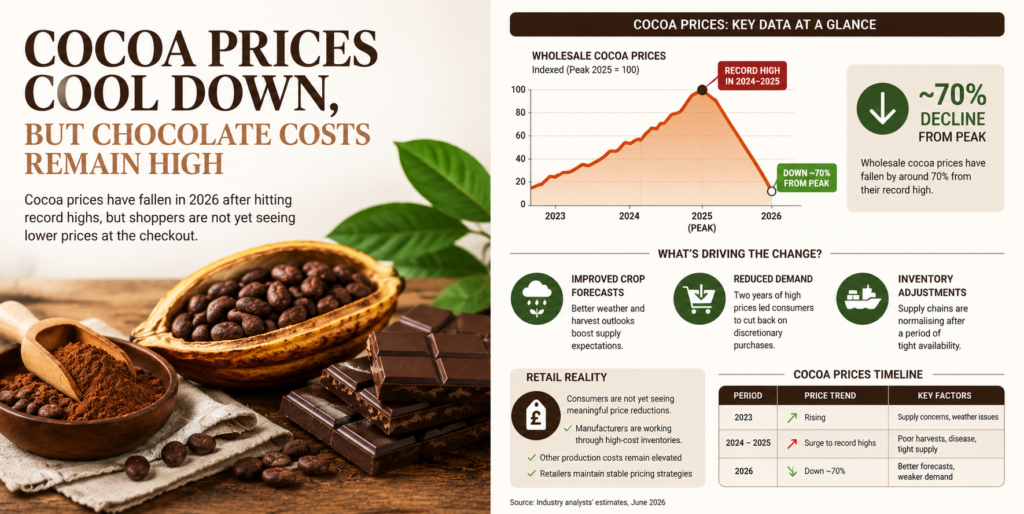
The global cocoa market is undergoing a dramatic shift in 2026. After two years of unprecedented price increases that sent shockwaves through the chocolate industry, cocoa prices have fallen sharply from their historic highs. For manufacturers, retailers and consumers alike, the question now is whether lower cocoa costs will eventually translate into more affordable chocolate products.
While the cocoa market appears to be stabilising, the effects of the supply crisis that dominated 2024 and 2025 continue to influence pricing strategies, production decisions and consumer expectations throughout the confectionery sector.
A Market Rebounds from Historic Highs
The cocoa industry experienced one of the most turbulent periods in its history during 2024 and 2025. Poor harvests in major cocoa-producing countries, including Côte d’Ivoire and Ghana, combined with climate-related challenges and crop diseases, created severe supply shortages.
As a result, cocoa prices soared to record-breaking levels, forcing manufacturers to absorb higher costs or pass them on to consumers through increased retail prices.
By mid-2026, however, market conditions began to change. Improved weather conditions and more optimistic crop forecasts helped boost confidence in future cocoa supplies. At the same time, prolonged high chocolate prices led many consumers to reduce discretionary spending, resulting in softer demand across several markets.
These factors contributed to a significant decline in wholesale cocoa prices, with some analysts estimating that prices have fallen by approximately 70 per cent from their peak levels.
Why Chocolate Prices Have Not Fallen
Despite the dramatic drop in cocoa costs, consumers have yet to see meaningful reductions in the price of chocolate bars, boxed chocolates and confectionery products.
The reason is relatively straightforward. Many chocolate manufacturers purchased cocoa at elevated prices during the height of the market crisis. These inventories continue to move through production systems and supply chains, meaning companies are still working with ingredients acquired at significantly higher costs.
In addition, manufacturers face ongoing increases in other areas of production, including packaging, transportation, labour and energy expenses. Even as cocoa prices ease, these operational costs remain elevated compared with pre-pandemic levels.
Retailers are also cautious about reducing shelf prices too quickly, preferring to maintain stable pricing strategies rather than frequently adjusting product costs in response to market fluctuations.
Manufacturers Reassess Their Strategies
The cocoa crisis forced many chocolate companies to rethink how they formulate and market their products. Some brands reduced product sizes, introduced smaller package formats or adjusted recipes to manage rising ingredient costs.
Now that cocoa prices have softened, manufacturers are evaluating whether those temporary measures should remain in place.
For premium chocolate makers, the lower cocoa market presents an opportunity to reinforce quality messaging, craftsmanship and flavour. For mass-market brands, decisions may centre on balancing profitability with consumer expectations for value.
Many companies are expected to take a cautious approach, waiting to see whether current cocoa prices remain stable before making significant pricing or formulation changes.
Consumers Continue to Feel the Impact
Chocolate lovers may be disappointed that lower cocoa prices have not yet translated into immediate savings at the checkout.
Consumer behaviour, however, has already shifted. During the period of record cocoa costs, many households became more selective about chocolate purchases, reserving premium products for special occasions or seeking out smaller indulgences rather than larger treats.
This change in purchasing habits has encouraged manufacturers to introduce a wider variety of portion-controlled products and premium offerings designed to justify higher price points.
Industry observers note that consumer perceptions of chocolate value have evolved over the past two years. Many shoppers now better understand the challenges facing cocoa growers and global supply chains, creating greater appreciation for sustainably sourced and ethically produced chocolate.
Looking Ahead to 2027
Although market conditions appear more favourable than they did during the height of the cocoa crisis, uncertainty remains.
Climate change continues to present long-term risks for cocoa-producing regions, while geopolitical and economic pressures can quickly influence commodity markets. As a result, industry leaders are cautious about declaring a complete return to normal.
What seems clear is that the chocolate industry has entered a new era of market volatility. Manufacturers, retailers and consumers have all experienced the impact of extreme cocoa market fluctuations, and many businesses are adapting their long-term strategies accordingly.
For now, cocoa prices may be falling, but the journey from commodity markets to supermarket shelves takes time. Consumers hoping for significantly cheaper chocolate may need to wait a little longer before the benefits of lower cocoa costs are reflected in the products they purchase.
As 2026 progresses, the chocolate industry will be watching closely to see whether the current period of stability marks the beginning of a sustained recovery or simply another chapter in an increasingly unpredictable cocoa market.