Founded: 1990
Home: Pontedera, Tuscany, Italy
Chocolate Model: Bean to bar
Milestone: Toscano Black 70, 1998
Signature Chocolates: Porcelana and Chuao
Known for: Fine cacao, origin chocolate and Tuscan craftsmanship
Visit Amedei




Amedei
Tuscan Chocolate from Cacao Bean to Finished Bar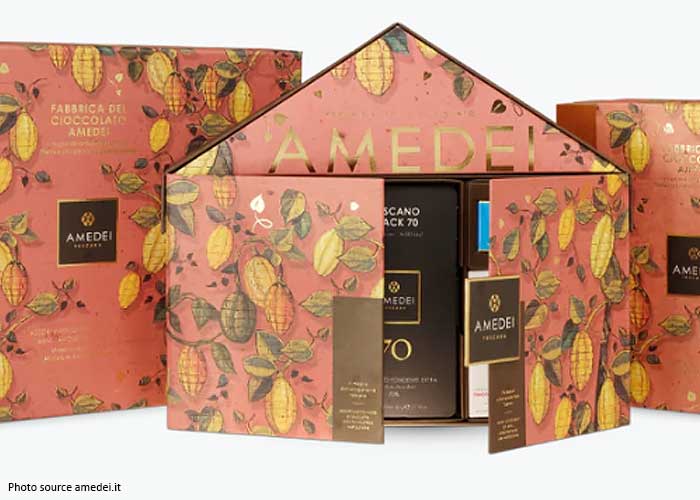

Helping Pioneer Bean-to-Bar Chocolate in Italy
Amedei was founded in 1990 in Pontedera, Tuscany, beginning in a converted former foundry measuring just 45 square metres.
From that small workshop, the company pursued an ambitious idea: create fine Italian chocolate by paying as much attention to cacao selection and processing as to the finished bar. That pursuit eventually took Amedei beyond Tuscany and directly into cacao-growing regions.
Today, Amedei controls the transformation of cacao beans into chocolate at its Tuscan factory, combining direct sourcing with roasting, refining and extended conching.
Toscano Black Helps Launch a Movement
A defining moment arrived in 1998 with Toscano Black 70. Amedei describes the 70 per cent dark chocolate as Italy’s first bean-to-bar chocolate, created through direct control of the process from cacao selection to finished bar.
The chocolate remains part of Amedei’s collection today. Its blend brings together cacao from Madagascar, Ghana, Ecuador and Venezuela, producing a chocolate designed to balance several origins rather than showcase only one.
Toscano Black established a model that would become central to Amedei: understanding what happens before cacao reaches Italy is as important as what happens inside the chocolate factory.
Searching for Exceptional Cacao
Amedei’s search for cacao has led to direct relationships with producers in growing regions around the world.
The company says those relationships allow it to source directly while maintaining closer control over the cacao entering its production process. Different origins are selected for their individual aromatic characteristics, providing the foundation for both blends and single-origin chocolates.
Once the dried cacao reaches Tuscany, beans are inspected before roasting and refining. Amedei can conch its chocolate for up to 72 hours, allowing flavour and texture to develop gradually. The process keeps the cacao bean — rather than simply the finished recipe — at the centre of the company’s chocolate making.
Porcelana and Chuao Put Origin in the Spotlight
Two chocolates became especially important to Amedei’s international reputation.
In 2000, Amedei introduced Porcelana, produced from rare Criollo cacao grown southwest of Venezuela’s Lake Maracaibo. Its name refers to the unusually pale colour of the cacao beans.
A year later came Chuao, named for the Venezuelan cacao-growing region from which its beans originate.
These chocolates helped demonstrate how differences in cacao genetics and place could be translated into noticeably different finished bars. That approach now extends across a collection featuring cacao associated with origins including Venezuela, Madagascar, Ecuador and Grenada.
Recognition for Tuscan Chocolate
Amedei’s approach has also received substantial international recognition.
In 2008, Toscano Black 63 received Amedei’s first Golden Bean from London’s Academy of Chocolate. The company currently reports more than 90 awards and says it has received more Golden Bean honours from the Academy of Chocolate than any other chocolate company.
Those awards helped put both Amedei and modern Italian craft chocolate before an international audience. Yet its identity remains firmly Tuscan.
Chocolate may begin with cacao grown thousands of kilometres away, but the transformation takes place in Pontedera, where Amedei continues to roast, refine, conch and finish its chocolate.
Bringing Cacao and Tuscany Together
More than three decades after its founding, Amedei represents an important bridge between cacao origin and Italian food craftsmanship.
Its contribution goes beyond individual award-winning bars. By taking control of cacao selection and chocolate production in the 1990s, Amedei helped establish the idea that an Italian chocolate maker could work directly from the bean while treating origin as an essential part of flavour.
From Toscano Black to Porcelana and Chuao, that philosophy remains remarkably consistent: find distinctive cacao, understand its character and allow the finished chocolate to express it.
Featured in the latest edition of Chocolate Affairs Magazine.
Copyright: @amedeituscany8154