Heritage dates to: 1668
American chapter: 1845
St. Louis since: 1927
Home: St. Louis, Missouri
Specialty: Handcrafted chocolates and fine confections
Known for: French heritage, historic recipes, small-batch production and copper-kettle confectionery
Visit Bissinger’s




Bissinger’s
An American Chocolate House with French Roots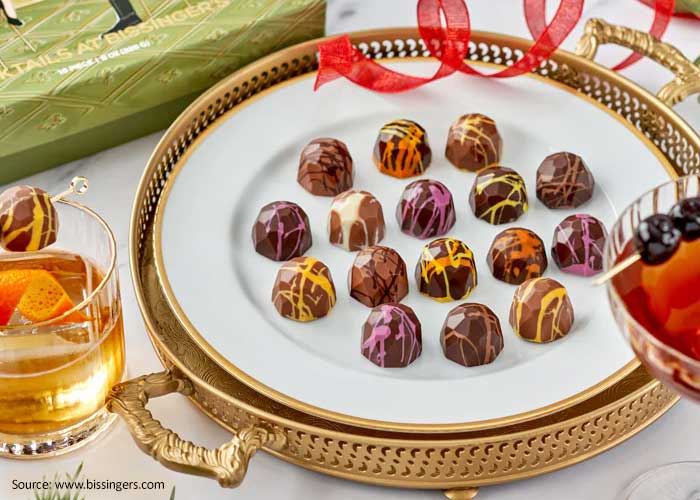

A Chocolate Legacy More Than 350 Years in the Making
Few American chocolate companies can trace their story as far back as Bissinger’s. Its heritage begins in France in 1668, long before the family’s confectionery traditions crossed the Atlantic and eventually found a permanent home in St. Louis.
Today, Bissinger’s remains known for handcrafted chocolates and confections made with techniques that reflect that European heritage. Its story spans centuries, connecting Old World confectionery traditions with one of America’s enduring chocolate houses.
From France to America
The Bissinger family traces its confectionery history to Paris in 1668, where its creations became associated with European nobility. The family later received recognition as Confiseur Imperial, or Confectioner to the Empire.
The American chapter began in 1845, when Karl Bissinger left France for the United States. He settled near Cincinnati, bringing family recipes, confectionery knowledge and a master candy maker with him.
Another generation eventually carried the tradition west. In 1927, Karl Bissinger’s son opened a kitchen in St. Louis, establishing the connection with the Missouri city that continues today.
Recipes That Crossed Generations
Bissinger’s history is more than a collection of dates.
The company says many of its confections remain inspired by recipes preserved in the Bissinger Family Cookbook dating from 1899. Traditional techniques also remain part of production, including small-batch preparation and the use of copper kettles. That approach places Bissinger’s in a different category from the modern bean-to-bar makers reshaping American craft chocolate.
Bissinger’s is first and foremost a chocolate house and chocolatier. Its heritage lies in transforming chocolate and other ingredients into finished confections using skills developed through generations of confectionery making. That distinction is precisely what makes the company an important part of the broader American chocolate story.
A Tradition of Handcrafted Confections
The Bissinger’s collection reflects its confectionery roots.
European-style truffles sit alongside caramels, chocolate-covered fruits, nuts and other speciality pieces. Long-standing favourites include chocolate-dipped oranges and apricots, molasses puffs and the company’s Bear Claws Royale.
Rather than abandoning its traditional identity as tastes have changed, Bissinger’s has continued to combine established recipes with newer flavours and collections. The result is a chocolate house that occupies an interesting middle ground: deeply connected to its past while continuing to evolve for contemporary chocolate lovers.
St. Louis Becomes Home
Although Bissinger’s history began in France and its first American operation was near Cincinnati, St. Louis has become central to its modern identity.
The company maintains several locations in the St. Louis area, including boutiques at Plaza Frontenac and Saint Louis Galleria. The Candy Kitchen in the city’s historic Hill neighbourhood combines a chocolate shop with a café.
Bissinger’s has also expanded its retail presence beyond Missouri, bringing the historic brand into additional American markets.
The Abel family acquired the company in 2019, beginning the latest chapter in a story that has passed through numerous generations and locations while retaining its connection to traditional confectionery.
An American Chocolate House with European Heritage
Bissinger’s is not a bean-to-bar maker in the contemporary craft-chocolate sense, nor does it need to be. Its significance lies elsewhere.
The company represents the historic chocolate-house tradition — one built around confectionery expertise, established recipes, hand-finishing and the gradual transfer of techniques from one generation to another.
From seventeenth-century France to nineteenth-century America and twentieth-century St. Louis, the Bissinger’s story also illustrates how European chocolate traditions became part of American food culture.
More than 350 years after that story began, Bissinger’s continues to provide a link between those traditions and the modern American chocolate counter.