Founded: 2010
Home: Eureka, California
Founders: Adam Dick and Dustin Taylor
Specialty: Single-origin, bean-to-bar chocolate
Known for: Two-ingredient dark chocolate, fine-flavour cacao and a craftsmanship philosophy rooted in woodworking and boat building
Visit Dick Taylor Craft Chocolate




Dick Taylor Craft Chocolate
From Boat Building to Bean-to-Bar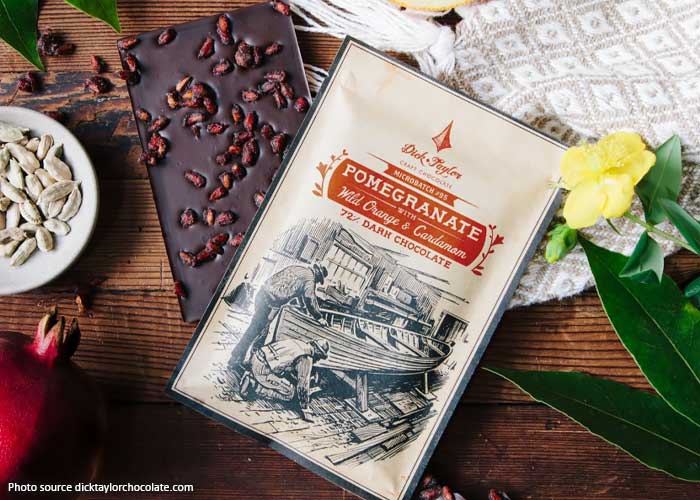

Where Craftsmanship Shapes the Chocolate
On California’s rugged northern coast, Dick Taylor Craft Chocolate approaches chocolate making as a craft in the most literal sense.
Founders Adam Dick and Dustin Taylor came to chocolate through woodworking and wooden boat building, trades where patience, precision and working by hand were already part of everyday life. When the emerging American craft chocolate movement caught their attention, they saw similarities between transforming raw wood into a finished vessel and transforming cacao beans into chocolate.
In 2010, they bought small-scale equipment and began experimenting. More than 15 years later, Dick Taylor has grown into an established American bean-to-bar maker while maintaining the hands-on philosophy that inspired it.
From Woodworking to Cacao
Dick and Taylor began making chocolate in a small former café at an Arcata lumber yard — appropriately, the same lumber yard where they had previously purchased materials for their carpentry work.
Production initially took place on Mondays while the pair continued their woodworking careers. That modest operation gave them the opportunity to refine their chocolate before expanding into larger facilities.
The company eventually moved to Eureka and, in November 2022, relocated again to a historic waterfront warehouse in Old Town. The approximately 7,000-square-foot building now combines the chocolate factory with a tasting room, café and bakery.
Starting With the Raw Cacao Bean
Dick Taylor makes chocolate from raw cacao rather than beginning with prepared couverture. The company seeks fine-flavour cacao and works with supply partners chosen for traceability and transparency. Its sourcing programme considers not only flavour but also what farmers receive for their cacao.
Once the beans reach Eureka, the chocolate-making process happens in-house.
Cacao is sorted before roasting, cracking and winnowing. The nibs are ground, combined with organic cane sugar and passed through a roll mill to refine the texture. The chocolate is then conched before being tempered and moulded into bars.
From raw cacao to finished chocolate, the company’s process can take approximately three weeks.
Two Ingredients, Different Origins
For its core dark chocolate, Dick Taylor takes a deliberately minimalist approach. The chocolate contains organic cacao and organic cane sugar, without added vanilla or emulsifiers. This allows the flavour characteristics already present in the cacao to remain central to the finished bar.
Its current single-origin collection includes cacao from places such as Belize, Madagascar, Tanzania and Vanuatu. Although the recipe may remain similar, each origin can produce noticeably different aromas and flavours.
That is particularly evident in the company’s Vanuatu chocolate. Dick Taylor sources cacao from Malekula Island and describes the origin as producing deep flavours with notes reminiscent of tobacco, molasses and dried fruit. The company also publishes sourcing information, including prices paid for cacao and farmgate pricing.
Craft Extends to the Wrapper
The founders’ maker mentality doesn’t stop when the chocolate leaves the mould. Dick Taylor has restored vintage printing presses that are used to letterpress the envelopes for its chocolate bars.
It is a small detail, but one that fits the company’s broader identity. Chocolate making, packaging, woodworking and printing are all treated as forms of craftsmanship rather than simply steps in manufacturing.
A Chocolate Destination on Humboldt Bay
Today, the Eureka factory has also become a visitor destination. Located on the waterfront of Humboldt Bay, the factory includes a tasting room and café where visitors can sample the company’s chocolate, order single-origin chocolate drinks and try baked goods made on site.
Factory tours take visitors behind the scenes to see how cacao is transformed from roasted bean to finished bar, followed by a chocolate tasting.
It is an appropriate extension of a company built around making things by hand: visitors can see the machinery, ingredients and processes behind a product that is often experienced only after it reaches the wrapper.
Keeping Craft at the Centre
Dick Taylor Craft Chocolate represents an important strand of the American bean-to-bar movement — one in which craft is as much a philosophy as a production method.
Adam Dick and Dustin Taylor may have exchanged timber and boats for cacao and chocolate, but the fundamental approach remained surprisingly similar: begin with carefully selected raw materials, understand them, work patiently and allow the finished product to reflect the material from which it came.
For chocolate lovers, that makes Dick Taylor an intriguing example of how traditional craftsmanship found a new expression in American chocolate.