Founded: 1997
Home: Italy
Founder: Gianluca Franzoni
Key Project: Criollo Project
Cacao Estates: Venezuela and Ecuador
Known for: Criollo cacao, biodiversity and single-variety chocolate
Visit Domori




Domori Fine Cocoa
Italian Chocolate Dedicated to Rare Cacao and Biodiversity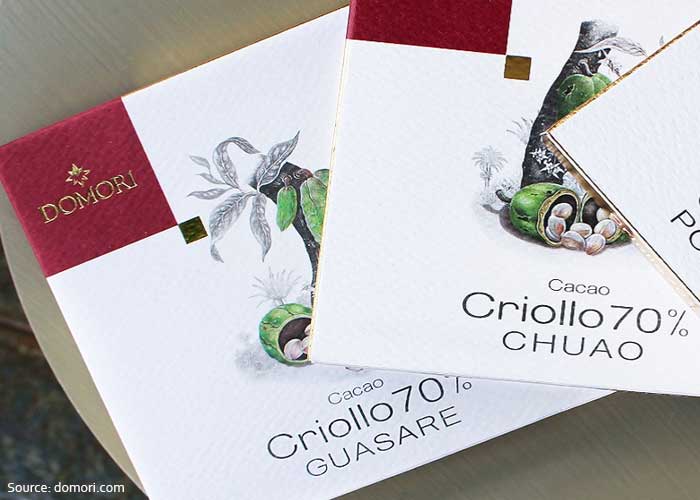

A Journey from Venezuela to Italian Chocolate
The story of Domori began before the company itself existed.
In 1993, Italian entrepreneur Gianluca Franzoni travelled to Venezuela. What followed was almost four years of hands-on research among cacao plantations and an increasing fascination with fine cacao, its genetics and its extraordinary range of flavours.
Franzoni founded Domori in 1997, creating an Italian chocolate company built around a different idea: exceptional chocolate begins with understanding and protecting the cacao itself. That philosophy eventually made rare Criollo cacao one of the defining elements of the Domori name.
Protecting the Genetics of Criollo Cacao
Domori’s most important work has centred on Criollo, an exceptionally rare group of cacao varieties.
The company’s Criollo Project focuses on studying, cultivating and protecting this genetic heritage. In Venezuela, Hacienda San José became the project’s flagship plantation and an important centre for cacao biodiversity.
The 185-hectare plantation is home to seven rare Criollo varieties. Domori uses the property not simply to produce cacao but also to study and preserve distinctive genetic and aromatic characteristics.
Among the Criollo varieties represented in Domori’s chocolate are Chuao, Guasare, Porcelana, Canoabo, Puertofino and Puertomar. That work gives chocolate lovers an unusual opportunity to explore differences within Criollo rather than treating it as a single flavour.
Chocolate That Makes Cacao the Focus
Domori’s single-variety bars are deliberately restrained. Several of its 70 per cent Criollo chocolates contain only cacao paste and cane sugar. By keeping the recipe simple, the chocolate is designed to reveal characteristics of the cacao rather than mask them with additional flavours.
The approach becomes especially interesting when different varieties are tasted together.
Porcelana, Chuao and Guasare, for example, can each express different aromatic characteristics despite belonging to the broader Criollo family. Domori’s collections turn those distinctions into a way of exploring cacao biodiversity through chocolate.
Research Expands to Ecuador
Domori’s work with Criollo has expanded beyond Venezuela.
In 2017, the project entered a new phase with Hacienda San Cristóbal in Ecuador. The 47-hectare plantation uses precision-agriculture techniques including higher planting density, grafting and fertigation while continuing the company’s work with Criollo genetics.
The contrast between the two properties is particularly interesting.
Hacienda San José represents a more traditional cultivation model in Venezuela, while Hacienda San Cristóbal explores how agricultural technology can contribute to productivity and cacao quality without abandoning genetic preservation. Together, the plantations make cacao research an unusually visible part of Domori’s identity.
From Cacao Research to a Global Chocolate Company
Domori has changed considerably since its founding.
The company joined the Illy Group in 2006, with Franzoni remaining involved as president. In 2019, Domori became part of Polo del Gusto, the food-and-beverage group chaired by Riccardo Illy.
Domori has also expanded beyond consumer chocolate. Domori Professional, launched in 2011, supplies chocolate for chefs and pastry professionals, while the first dedicated Domori Store opened in Turin’s Piazza San Carlo in 2022.
Yet cacao remains the thread connecting these different parts of the business.
Putting Cacao Before Chocolate
Domori’s importance lies less in elaborate confectionery than in its persistent focus on what happens before chocolate is made.
Genetics, biodiversity, cultivation, origin and sensory characteristics all influence the finished bar.
That makes Domori particularly relevant to today’s growing interest in cacao terroir and origin-focused chocolate. Instead of asking only how chocolate should taste, the company encourages another question:
Which cacao created those flavours in the first place?