Founded: 1916
Headquarters: Tokyo, Japan
Meiji Milk Chocolate: Since 1926
Cocoa Support: Since 2006
Known for: Milk chocolate, dark chocolate and origin-focused cacao
Visit Meiji Chocolate




Meiji Chocolate
A Century of Japanese Chocolate Innovation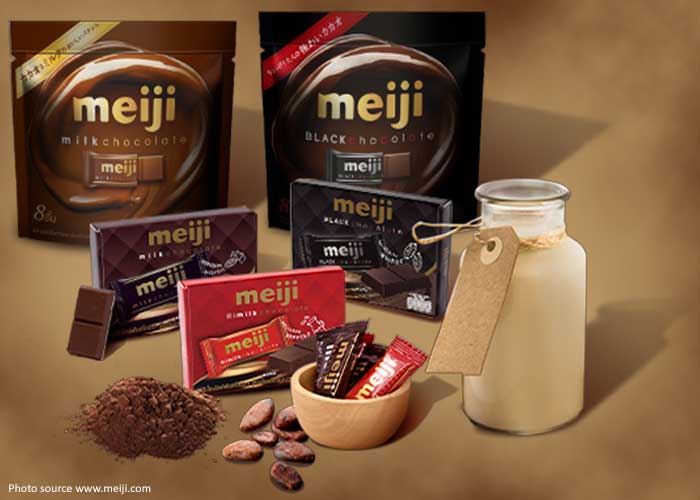

From Everyday Chocolate to a Deeper Exploration of Cacao
Nearly a Century of Chocolate in Japan
Meiji has played a significant role in Japan’s chocolate culture for generations. Its best-known classic, Meiji Milk Chocolate, was introduced in 1926 and became one of the products that helped make chocolate an everyday treat for Japanese consumers.
Nearly a century later, Meiji continues to refine the familiar bar rather than simply preserving it unchanged. Its developers adjust elements such as cacao roasting and ingredient selection as consumer tastes evolve, while maintaining the fundamental character of the original chocolate.
That combination of familiarity and continual refinement has become a defining characteristic of Meiji’s approach to chocolate.
Exploring Cacao Through Science
Behind Meiji’s mass-market presence is extensive research into cacao itself.
The company’s chocolate developers study how variables such as cacao origin, fermentation, roasting and formulation influence flavour. Meiji has worked directly with cacao-producing communities and analysed beans both locally and in Japanese laboratories to better understand how processing decisions affect the finished chocolate.
That work has helped move Meiji beyond producing familiar everyday bars towards chocolates designed to highlight the individual character of cacao.
Meiji The Cacao Showcases Origin
Meiji’s premium cacao ranges have provided a platform for this research.
The company’s origin-focused chocolates have featured cacao from countries including Venezuela, Peru and the Dominican Republic, allowing consumers to experience differences in aroma and flavour between growing regions. Meiji says these products use cacao mass produced from beans grown in areas where it has supported farmers through its cocoa programme.
The result is a different side of Japanese chocolate — one that encourages consumers to think about cacao in much the same way they might consider the origin and flavour profile of coffee or wine.
Supporting Cocoa-Producing Communities
Meiji established Meiji Cocoa Support in 2006. The programme works with cocoa-growing regions on issues including cultivation techniques, bean quality, farmer livelihoods and environmental conservation.
Its activities have extended across producing countries in Africa, Latin America and Asia. Meiji has also worked to improve traceability within its cocoa supply chain and connect the quality of the finished chocolate more closely with conditions at origin.
For Meiji, that relationship is increasingly tied to product development: improving cacao quality at the farm level can create better chocolate while supporting the communities responsible for producing its essential ingredient.
A Japanese Perspective on Chocolate
Meiji occupies an unusual place in the international chocolate landscape. It has the manufacturing scale of a major food company but continues to invest in cacao research, origin-specific flavour and relationships with producing communities.
Its story therefore extends well beyond the familiar red-and-white package of Meiji Milk Chocolate.
From a bar first introduced in 1926 to contemporary explorations of cacao origin and flavour, Meiji demonstrates how an established chocolate company can preserve a familiar national brand while continuing to rethink what chocolate can become.
copyright #Candy Is Dandy