Founded: 2013
Home: Ecuador
Founders: Jerry Toth, Carl Schweizer & Dennise Valencia
Cacao Origin: Piedra de Plata, Manabí
Chocolate Model: Tree to bar
Known for: Nacional cacao, terroir and aged dark chocolate
Visit To’ak Chocolate




To’ak Chocolate
Ecuadorian Tree-to-Bar Chocolate Inspired by Cacao, Terroir and Time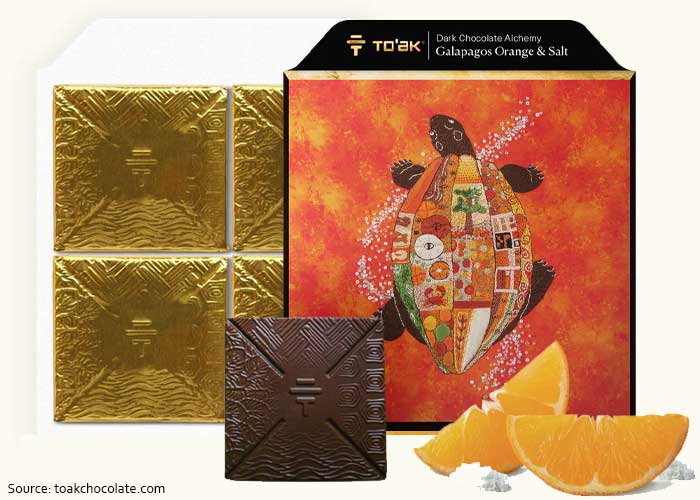

From Rainforest Conservation to Ecuadorian Chocolate
To’ak Chocolate began somewhere unusual for a luxury chocolate company: a rainforest conservation project in Ecuador.
Co-founder Jerry Toth was working through the nonprofit Third Millennium Alliance to establish a rainforest reserve along Ecuador’s coastal mountain range. Surrounded by cacao-growing country, he began cultivating cacao and experimenting with chocolate in a simple bamboo house in the forest.
Those experiments eventually led Toth to Carl Schweizer and Dennise Valencia. In 2013, they founded To’ak with an ambitious idea: treat fine dark chocolate with the same attention to origin, harvest, ageing and tasting commonly associated with wine.
Discovering Ancient Nacional Cacao
Central to To’ak’s story is Nacional cacao, an historic Ecuadorian cacao variety prized for its aromatic character.
The company’s search led to Piedra de Plata, a remote valley in Ecuador’s Manabí province where unusually old cacao trees had survived. Genetic analysis later found nine trees among 47 sampled in the valley to be 100 per cent pure Nacional.
That discovery became more than a sourcing opportunity.
To’ak has worked with farmers, conservation organisations and researchers to help preserve Nacional genetics. In 2018, the company began collaborating on a genetic bank using grafting and propagation to protect pure Nacional material for future generations.
Tree-to-Bar Chocolate Made in Ecuador
To’ak describes itself as a tree-to-bar chocolate maker. Its chocolate is designed, crafted and packaged in Ecuador, while cacao is sourced directly from growers in Piedra de Plata.
The location is fundamental to its approach.
Cacao trees in Piedra de Plata grow alongside banana, papaya, mango, citrus, guava and other tropical plants. Climate, soil and surrounding vegetation contribute to what To’ak approaches as terroir — the idea that cacao can express characteristics of the place and conditions in which it grows.
Its Harvest editions take that concept even further. Different harvest years are released separately so chocolate lovers can explore how growing conditions influence flavour from one year to another.
What Happens When Chocolate Ages?
Perhaps To’ak’s most unusual work involves ageing dark chocolate.
Beginning in 2013, the company launched what it describes as the first long-term programme devoted to systematically exploring aged chocolate. Its experiments have included former Cognac, whisky, tequila, bourbon and wine casks, along with Ecuadorian woods and other aromatic materials.
The idea borrows from wine and spirits but takes advantage of cacao butter’s ability to absorb aromas.
Some editions have been aged for several years. Rather than adding spirits directly to the chocolate, ageing allows aromas from the vessel to interact gradually with it. To’ak says laboratory testing of its cask-aged chocolate has not detected ethanol, although trace amounts remain theoretically possible.
It’s an approach that makes time itself part of the chocolate-making process.
Chocolate Connected to Conservation
To’ak’s conservation origins remain part of the company.
Its cacao sourcing focuses on farms that support biodiversity, while the company describes regenerative agriculture as one of its commitments. It also buys cacao directly from growers in Piedra de Plata and reports paying substantial premiums above local market prices.
That connection between agriculture and chocolate is important.
Rather than importing cacao elsewhere for transformation, To’ak keeps the production and presentation of its chocolate in Ecuador, allowing more of the process to remain connected to the country where the cacao grows.
Rethinking What Fine Chocolate Can Be
To’ak became internationally known partly because of the extraordinary prices attached to some of its earliest limited editions. But focusing only on price misses the more interesting story.
The company has spent more than a decade experimenting with ideas that are familiar in wine but still relatively unusual in chocolate: appellation, vintage, terroir, ageing and conservation of rare plant genetics.
Its Origin editions can be extremely limited — typically around 150 bars — while Signature editions are produced in somewhat larger quantities.
From the old cacao trees of Piedra de Plata to experiments with years-long ageing, To’ak offers a distinctive argument for viewing fine chocolate differently: not simply as confectionery, but as an agricultural product capable of expressing origin, harvest and time.