669-1324
32-1 Yurinokidai-5chome, Sanda-city, Hyogo-pre, JAPAN
info-web@es-koyama.com
+81-79-564-3192
Visit Pâtissier eS KOYAMA




Susumu Koyama
Japanese Chocolate Excellence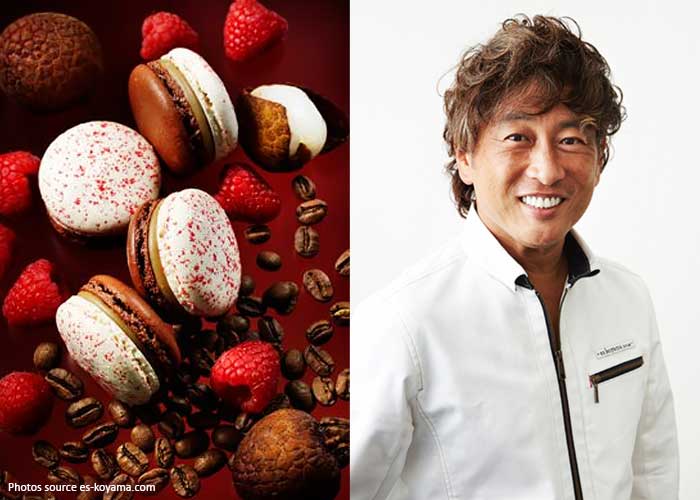

Where Japanese Flavour Meets the World of Cacao
Japanese pastry chef and chocolatier Susumu Koyama has built a distinctive chocolate identity by combining technical precision with flavours rooted in Japanese culture. From sake lees and soy sauce to fermented ingredients rarely encountered in European-style bonbons, his creations demonstrate how local culinary traditions can give chocolate an entirely different voice.
Born in Kyoto in 1964, Koyama established Pâtissier eS KOYAMA in Sanda City, Hyogo Prefecture, in 2003. What began as a pastry destination has since developed into a collection of specialised shops and creative spaces devoted to pastry, chocolate, bread, confectionery and education.
From Pastry Chef to Chocolatier
Koyama’s career began well before the opening of eS KOYAMA. After graduating from Osaka’s Tsuji Culinary Institute in 1983, he joined Swiss confectionery company Heidi in Kobe. He initially worked on the café floor before moving into pastry, eventually becoming head pastry chef and director of product development.
Competitions became an important part of his early career, earning him recognition throughout Japan. He established his own company in 2000 and opened Pâtissier eS KOYAMA three years later.
Chocolate eventually became one of his most internationally recognised areas of work.
Bringing Japanese Ingredients to Chocolate
Koyama’s chocolates frequently draw upon flavours associated with Japanese cooking rather than simply recreating established European combinations.
His bonbons have incorporated ingredients including sake lees, Daitokuji natto and shoyu soy sauce, using the character of each ingredient to complement cacao rather than overwhelm it.
That approach reflects a larger philosophy behind his work. Koyama considers cacao an agricultural product whose flavour changes according to origin, producer and growing conditions. Current eS KOYAMA creations continue to explore cacao from different regions, with the company describing Koyama’s approach as drawing out the individual character of each cacao as fully as possible.
Recognition in Paris
Koyama’s international chocolate reputation accelerated dramatically in 2011, when he first exhibited at the Salon du Chocolat in Paris.
The Club des Croqueurs de Chocolat (C.C.C.) subsequently became closely associated with his international recognition. His official biography records top-level C.C.C. honours across numerous years, including the organisation’s highest Gold Tablet distinction for the ninth time in 2022, tenth in 2023 and eleventh in 2024.
His success helped introduce an international chocolate audience to a style that was unmistakably influenced by Japanese ingredients and sensibilities.
Creating a Destination for Chocolate and Pastry
Pâtissier eS KOYAMA has grown into considerably more than a conventional pastry shop.
The Sanda property includes specialist concepts for different areas of Koyama’s work. In 2013, the company opened Rozilla, a dedicated chocolaterie. Other spaces encompass bread, macarons and confitures, cakes, cheese desserts and educational experiences.
Education is particularly important to Koyama’s philosophy. The company opened its School of Sweet Trick in 2004, while Miraiseisakusho, established in 2013, was created specifically for children aged 12 and younger. Koyama has also delivered lectures for children and educators.
Continuing to Explore Cacao
More than two decades after opening Pâtissier eS KOYAMA, Koyama continues to develop new chocolate work.
The company’s 2026 offerings demonstrate that exploration is ongoing, with chocolate collections and pastries continuing to highlight different cacao origins and flavour characteristics. Meanwhile, eS KOYAMA expanded beyond its Sanda home in 2026 with the opening of its first satellite location at JR Nagoya Takashimaya.
For Koyama, chocolate provides a meeting point between cultures. Cacao may originate thousands of kilometres from Japan, but through carefully chosen ingredients, precise technique and a distinctly Japanese flavour vocabulary, the finished chocolate becomes something unmistakably his own.