


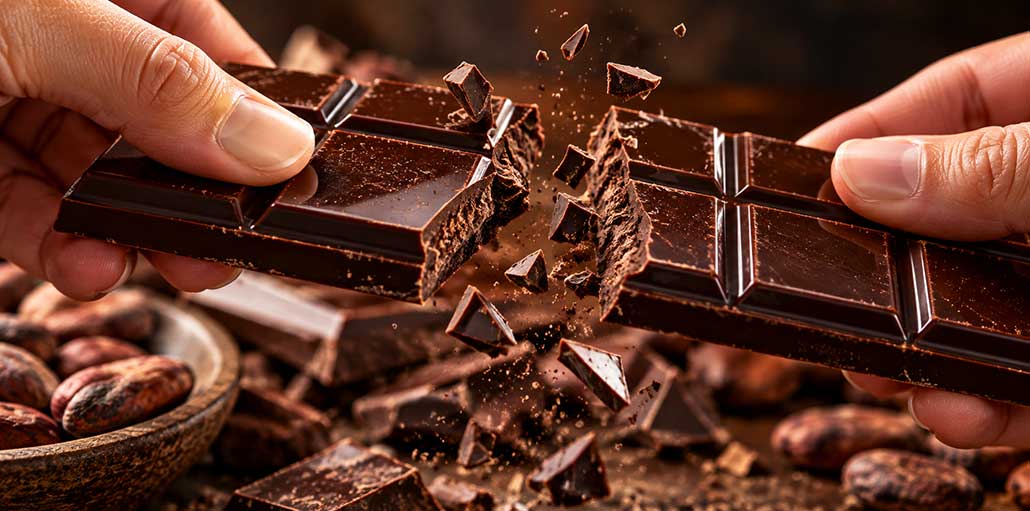
Did You Know? The Snap of Chocolate Can Reveal Its Quality
A piece of chocolate can tell a story before it ever reaches the tongue. Hold a well-made chocolate bar between two hands and break it. That distinctive, clean snap is more than a satisfying sound — it can provide clues about how the chocolate was made, tempered and stored.
Chocolate makers pay close attention to this characteristic because the structure of cocoa butter determines whether finished chocolate is glossy and firm or soft, dull and crumbly. The science behind that familiar snap is one of the reasons tempering is so important to chocolate-making.
The Science Behind Chocolate’s Perfect Snap
What Creates Chocolate’s Snap?
Chocolate contains cocoa butter, a natural fat found in cacao beans. Cocoa butter can solidify into several different crystalline structures depending on how the chocolate is heated and cooled.
During tempering, chocolate makers carefully control temperature to encourage the formation of stable cocoa butter crystals. The desirable structure gives properly tempered chocolate many of the qualities consumers associate with a well-made bar: a smooth surface, attractive sheen, firm texture and clean break.
When a thin piece of properly tempered dark chocolate is broken, it will generally produce a noticeably crisp snap.
The effect is usually less pronounced in milk chocolate and white chocolate because their formulations contain additional ingredients and different proportions of cocoa butter and other fats.
Why Tempering Matters
Melting chocolate and allowing it to harden again does not necessarily return it to its original condition.
Without controlled tempering, cocoa butter can crystallise unevenly. The finished chocolate may remain soft at room temperature, appear streaky or dull, break poorly or develop a whitish-grey coating over time.
Professional chocolatiers therefore heat, cool and gently reheat chocolate within controlled temperature ranges before moulding or coating confections.
The precise temperatures vary according to the type and formulation of chocolate, but the objective remains the same: creating a stable crystalline structure.
Tempering is particularly important for moulded bars, bonbons and chocolate decorations where appearance and texture are part of the experience.
Does a Loud Snap Always Mean Better Chocolate?
Not necessarily.
Snap can be an indicator of proper temper and structure, but it should not be treated as a universal test of chocolate quality.
A thick dark chocolate bar will naturally sound different from a thin milk chocolate bar. Ingredients such as nuts, fruit, caramel, biscuit pieces and fillings can also change the way a product breaks.
Temperature matters too. Chocolate that has become very cold may seem exceptionally hard, while chocolate kept somewhere warm can soften even when it was originally tempered correctly.
Recipe, thickness, cocoa content and storage conditions therefore need to be considered alongside the sound.
Fine chocolate is ultimately evaluated using several characteristics, including aroma, appearance, texture, flavour and finish — not simply how loudly it breaks.
When Chocolate Loses Its Snap
Storage can dramatically change chocolate’s texture.
Chocolate is best protected from excessive heat, moisture, direct sunlight and sudden temperature changes. If a bar repeatedly warms and cools, its cocoa butter structure can be disrupted.
Consumers may then notice fat bloom, which appears as pale or greyish streaks or patches on the surface. This does not automatically mean the chocolate has spoiled, but its appearance and texture may no longer be at their best.
Moisture can cause another problem known as sugar bloom. When moisture dissolves sugar on the chocolate’s surface and later evaporates, sugar crystals can remain behind, producing a rough or dusty appearance.
Both demonstrate why chocolate makers devote so much attention to storage and handling after production.
Listen Before You Taste
Chocolate tasting is normally associated with flavour and aroma, but sound can add another dimension to the experience.
Breaking a bar allows the taster to examine its structure and texture before tasting it. A clean break may suggest good tempering, while the exposed interior can reveal inclusions, air pockets and the consistency of the chocolate itself.
Then come the other senses: the aroma released from the freshly broken chocolate, the texture as it begins to melt and, finally, the progression of flavours across the palate.
The next time a chocolate bar is opened, there is no need to rush immediately to the first bite.
Break off a piece first.
That little snap might have something to say.