


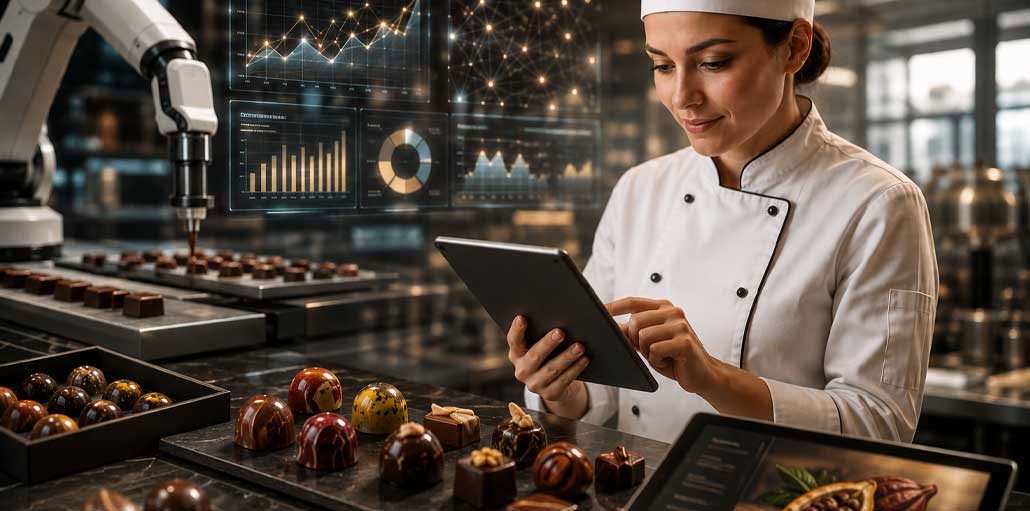
Canadian Chocolatiers Embrace AI and Digital Innovation
Digital tools are opening new possibilities for chocolate makers, from smarter forecasting to faster product development..
Chocolate making has always balanced tradition with innovation. Craftsmanship, creativity and quality ingredients remain at its heart, but a new generation of digital tools is beginning to influence how chocolate is developed, produced, marketed and sold.
Artificial intelligence is already being used by major international food and confectionery companies to analyse data, assist product development and improve business decisions. For Canadian chocolate makers, many of the same technologies could eventually offer new ways to understand customers, manage inventory and experiment with products.
The opportunity isn’t about replacing the chocolatier.
It’s about giving the chocolatier better tools.
AI Helps Inspire New Flavours
Creating a successful chocolate product has traditionally relied on the expertise of chocolatiers who understand flavour, texture and consumer preferences. While that expertise remains essential, AI is now providing additional insights that can support product development.
By analysing thousands of flavour combinations, customer reviews and purchasing trends, AI systems can identify patterns that humans might overlook. These tools can help chocolatiers explore unique pairings and emerging flavour opportunities.
Many food manufacturers worldwide are already using similar technology to accelerate product innovation, and Canadian chocolate makers are beginning to take notice.
Smarter Forecasting and Inventory Management
One of the biggest challenges facing chocolate businesses is predicting demand. Sales often fluctuate around major holidays such as Valentine’s Day, Easter, Halloween and Christmas. Unexpected weather conditions, economic changes or viral social media trends can also influence purchasing behaviour.
AI-powered forecasting tools can help businesses analyse historical sales patterns, seasonal demand and other data to make more informed inventory decisions. This allows manufacturers and retailers to improve inventory planning, reduce waste and ensure popular products remain available when customers want them.
For artisan chocolatiers operating with limited production capacity, better forecasting can significantly improve efficiency and profitability. These improvements help businesses remain competitive in changing markets.
Personalised Chocolate Shopping Experiences
E-commerce provides another potential use for AI. Recommendation systems can analyse browsing and purchasing patterns to help customers discover products that match their interests. A customer who frequently purchases dark chocolate bars, for example, may receive recommendations for single-origin chocolates or limited-edition cacao varieties. Someone who enjoys gifting chocolates may be shown seasonal collections and premium assortments.
These personalised experiences help customers discover products that match their interests while increasing engagement for chocolate businesses. As e-commerce continues to grow, personalised recommendation systems are expected to become more common throughout the chocolate industry.
Smart Packaging Creates New Connections
Packaging is also becoming more interactive. Many chocolate companies now incorporate QR codes, augmented reality experiences and digital storytelling into their packaging. Consumers can scan a code using a smartphone and instantly access information about ingredient sourcing, flavour profiles, pairing suggestions or the story behind a product.
For consumers who value transparency, these digital tools create stronger connections between the maker and the customer.
Digital Tools Support Sustainability
Digital traceability and data systems can help chocolate businesses follow ingredients through increasingly complex supply chains and identify opportunities to reduce waste or improve efficiency.
These innovations allow businesses to make more informed decisions while supporting environmental and ethical goals. As sustainability becomes increasingly important to consumers, technology is helping companies demonstrate accountability and build trust.
Will AI Replace the Chocolatier?
And the answer is no — that’s not where current evidence points.
Even large companies using sophisticated AI still rely on people to evaluate taste, texture, aroma and whether an idea actually makes sense. Mondelēz’s AI-assisted development process retains human involvement, while its Bournville research centre combines AI and virtual-reality technology with more than 50 trained chocolate tasters.
Chocolate is sensory. AI can analyse thousands of possibilities, but it cannot replace the experience of tasting a bonbon, judging a ganache or understanding how a chocolate should melt on the palate.
Craftsmanship Still Comes First
Canadian chocolate has built its reputation on craftsmanship, creativity and quality. Digital technology doesn’t change those fundamentals. What it can change is the information available to the people behind the chocolate.
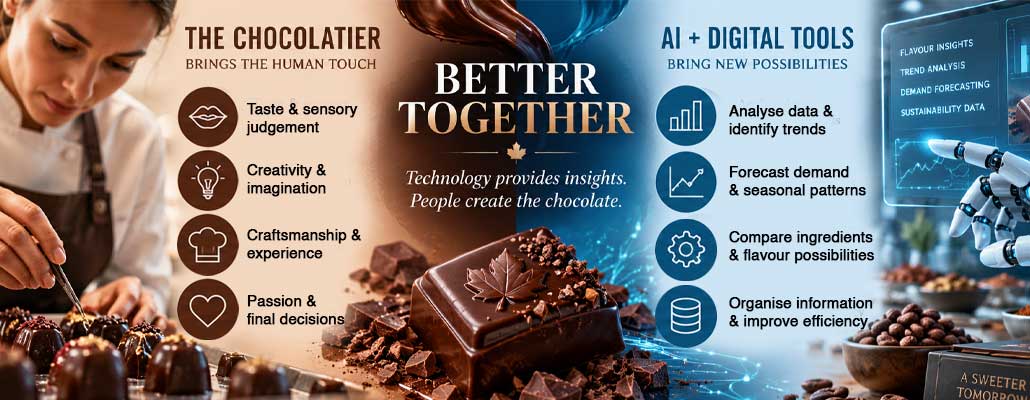
AI can help analyse trends, explore product possibilities and improve forecasting. Digital commerce can make product discovery more personalised. Traceability tools can provide greater insight into complicated supply chains.
But technology still needs human judgement.
For Canadian chocolatiers, the most interesting future may therefore be neither completely traditional nor completely digital. It could be a combination of both: centuries-old chocolate-making skills supported by a new generation of intelligent tools.
And ultimately, the final decision will still be made the old-fashioned way. Does the chocolate taste good?
Will AI Replace the Chocolatier?
And the answer is no — that’s not where current evidence points.
Even large companies using sophisticated AI still rely on people to evaluate taste, texture, aroma and whether an idea actually makes sense. Mondelēz’s AI-assisted development process retains human involvement, while its Bournville research centre combines AI and virtual-reality technology with more than 50 trained chocolate tasters.
Chocolate is sensory. AI can analyse thousands of possibilities, but it cannot replace the experience of tasting a bonbon, judging a ganache or understanding how a chocolate should melt on the palate.
Craftsmanship Still Comes First
Canadian chocolate has built its reputation on craftsmanship, creativity and quality. Digital technology doesn’t change those fundamentals. What it can change is the information available to the people behind the chocolate.
AI can help analyse trends, explore product possibilities and improve forecasting. Digital commerce can make product discovery more personalised. Traceability tools can provide greater insight into complicated supply chains.
But technology still needs human judgement.
For Canadian chocolatiers, the most interesting future may therefore be neither completely traditional nor completely digital. It could be a combination of both: centuries-old chocolate-making skills supported by a new generation of intelligent tools.
And ultimately, the final decision will still be made the old-fashioned way. Does the chocolate taste good?