


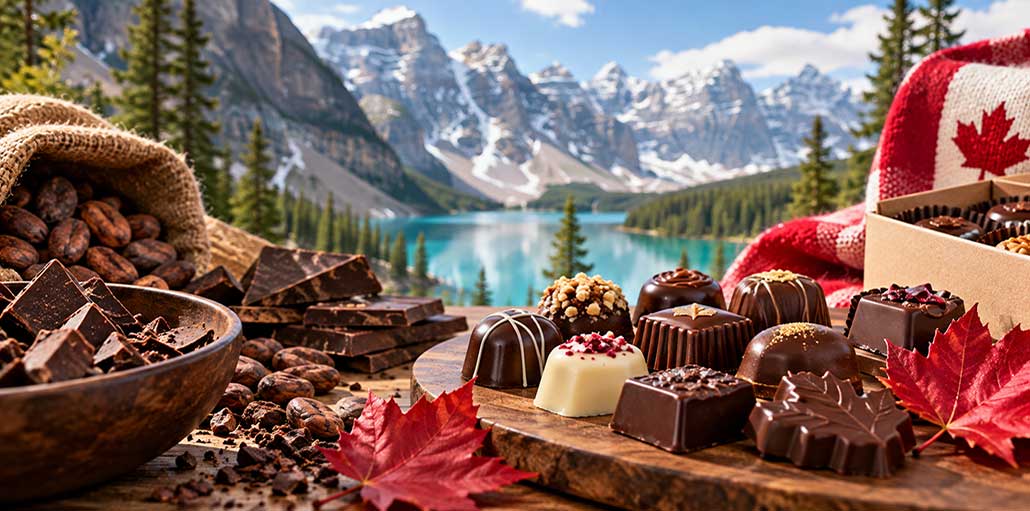
Canada Loves Chocolate More Than You Think
From historic chocolate companies and award-winning craft makers to festivals and sweet destinations, Canada’s relationship with chocolate runs surprisingly deep.
Chocolate has long been one of Canada’s favourite indulgences, but the country’s passion for all things cocoa extends far beyond the candy aisle.
Across Canada, historic chocolate companies share the landscape with independent chocolatiers, innovative bean-to-bar makers, specialty shops and chocolate-inspired destinations. Canadians enjoy chocolate during the biggest celebrations of the year, but it is just as likely to appear as an everyday treat, a locally made gift or the centrepiece of a weekend food adventure.
And Canadians spend accordingly. According to Statistics Canada, Canadian households spent an average of C$119 on chocolate bars in 2023.
A Nation of Chocolate Lovers
Chocolate remains an important part of Canada’s confectionery market, appearing everywhere from supermarket shelves and neighbourhood chocolate shops to farmers’ markets and online boutiques.
Valentine’s Day and Easter may provide some of the industry’s most visible chocolate moments, followed by Halloween and the winter holiday season, but Canadians buy chocolate throughout the year.
What has changed is the variety available. Alongside familiar mass-market products, consumers can now choose single-origin bars, handcrafted bonbons, premium truffles, vegan chocolate, locally inspired flavours and small-batch creations from makers across the country.
That growing selection has helped turn chocolate from a simple treat into something Canadians increasingly taste, compare, give and experience.
Canada’s Chocolate History Goes Back Generations
Canada’s chocolate story is not new.
Ganong was founded in 1873 in St. Stephen, New Brunswick, making it Canada’s oldest chocolate company. Its long history is closely connected with the development of Canada’s confectionery industry.
On the opposite coast, Rogers’ Chocolates traces its beginnings to 1885 in Victoria, British Columbia. Its historic Government Street shop remains one of the country’s most recognisable chocolate destinations.
Other familiar names, including Laura Secord, have helped make chocolate part of Canadian celebrations and gift-giving traditions for generations.
These businesses established a chocolate culture long before today’s craft movement arrived.
Canada’s Craft Chocolate Scene Is Thriving
Over the past decade, a new generation of Canadian makers has helped transform how consumers think about chocolate. Bean-to-bar producers oversee the process from cacao bean through roasting, grinding, refining and finally moulding the finished chocolate.
Canadian companies such as Hummingbird Chocolate, Palette de Bine, Qantu and Kasama Chocolate have helped introduce more Canadians to craft chocolate and the distinctive flavours associated with cacao grown in different regions. Today’s chocolate consumer is also increasingly curious about where cacao comes from, who grew it and how it was produced.
That has encouraged many makers to place greater emphasis on sourcing transparency, sustainability and relationships with cacao producers.
Chocolate Has Become a Canadian Travel Experience
Chocolate isn’t only something to eat anymore. It can also provide a reason to explore. Across the country, travellers can visit historic chocolate shops, artisan boutiques, production facilities and other chocolate-related attractions.
St. Stephen’s long association with Ganong has even earned the New Brunswick community a reputation as “Canada’s Chocolate Town.”
Elsewhere, travellers can build chocolate stops into weekend getaways, food trails and city breaks.
Festivals and special events add another dimension, offering tastings, demonstrations, workshops and opportunities to meet chocolatiers and discover products that may not normally appear in local shops.
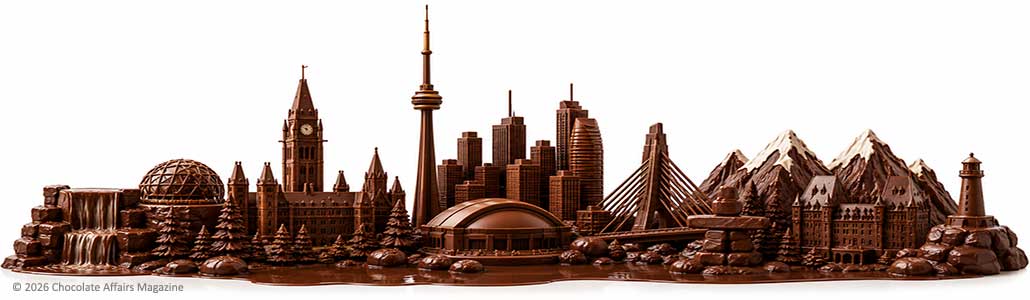
Canadian Flavours Make Chocolate Our Own
Perhaps the most interesting development is how Canadian makers are putting a distinctly local stamp on a product whose key ingredient must be imported. Chocolate flavoured with maple, berries, coffee, sea salt and icewine can connect an internationally sourced ingredient with Canadian agriculture and regional food traditions.
Makers are also experimenting with unusual inclusions, different cacao origins and increasingly sophisticated flavour combinations. Behind the scenes, innovation extends to sustainable packaging, direct sourcing and new production technologies. The result is an industry that respects chocolate tradition without being afraid to experiment.
Canada’s Chocolate Story Is Still Growing
Canada’s chocolate industry is substantial. Statistics Canada reported that Canadian factories manufactured approximately C$2.7 billion worth of chocolate and confectionery products in 2023, up from just under C$2.1 billion in 2020.
But numbers tell only part of the story.
Canada’s relationship with chocolate can be found in a 150-year-old confectionery company in New Brunswick, a tiny bean-to-bar workshop, a historic shop in Victoria, an artisan’s box of handmade bonbons and a family discovering a chocolate festival for the first time.
Together, they reveal a chocolate culture that is historic, creative and unmistakably Canadian. Perhaps Canada doesn’t simply love chocolate more than most people realise.
We’re getting better at making it our own.