


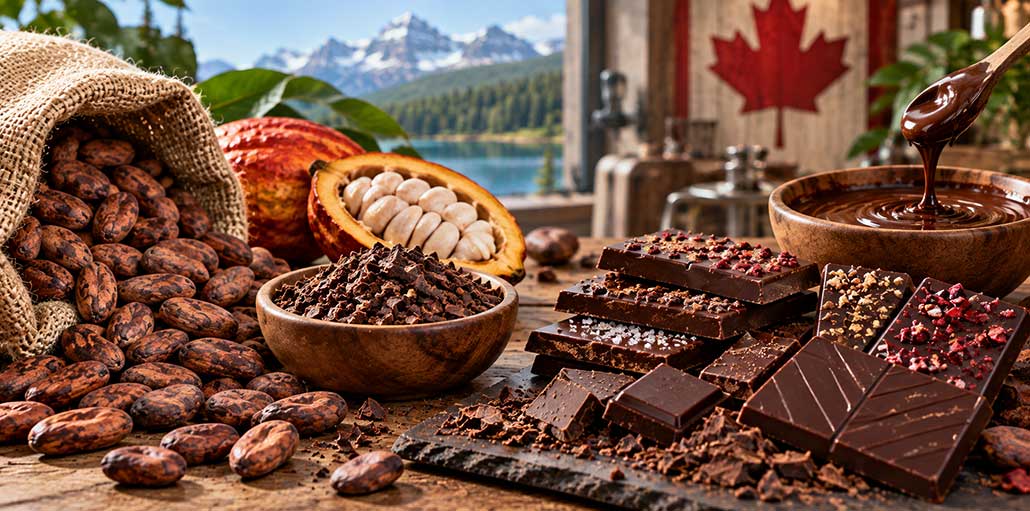
Made in Canada: The Rise of Bean-to-Bar Chocolate Makers
How Canadian makers are redefining craft chocolate from bean to bar.
Canada may not grow cacao, but it has become home to a thriving community of bean-to-bar chocolate makers who are earning recognition for quality, craftsmanship and innovation. From British Columbia to Quebec and beyond, artisan chocolate producers are transforming imported cacao beans into premium chocolate while building strong relationships with farmers and emphasizing transparency throughout the supply chain.
As consumers increasingly seek authentic food experiences and ethically sourced products, Canada’s bean-to-bar movement continues to gain momentum.
What Does Bean-to-Bar Really Mean?
The term bean-to-bar refers to chocolate makers who control the entire chocolate-making process, beginning with raw cacao beans and ending with the finished chocolate bar.
Unlike many traditional manufacturers that purchase pre-processed chocolate or cocoa liquor, bean-to-bar producers source cacao directly and oversee every stage of production. This includes sorting, roasting, cracking, winnowing, grinding, refining, conching, tempering and moulding.
By managing the complete process, makers can influence flavour development and create chocolates that reflect the unique characteristics of the cacao they select.
For chocolate enthusiasts, bean-to-bar often represents a higher level of craftsmanship and transparency.
Ethical Sourcing at the Heart of the Movement
Many Canadian bean-to-bar makers place a strong emphasis on ethical sourcing and direct relationships with cacao-growing communities.
Some producers work directly with cacao farmers, producer organisations or specialised sourcing partners, giving makers greater insight into where their cacao comes from and how it was produced. This approach helps improve transparency while supporting more sustainable growing practices.
Consumers today want to know where their food comes from and how it was produced. As a result, ethical sourcing has become an important part of the value proposition for many craft chocolate brands.
The focus extends beyond quality alone. Many makers are equally committed to supporting farmer livelihoods and promoting long-term sustainability throughout the cacao supply chain.
Exploring Regional Flavour Philosophies
One of the most exciting aspects of bean-to-bar chocolate is the celebration of cacao origin. Just as wine reflects the characteristics of a vineyard, cacao can express flavours influenced by geography, climate and growing conditions. This concept, often referred to as terroir, allows chocolate makers to showcase the unique qualities of beans from different regions.
Cacao from Madagascar may feature bright fruit notes, while beans from Ecuador can deliver floral characteristics. Peruvian cacao often offers complex layers of fruit and nuts, while some Central American varieties present earthy and spice-driven profiles.
Canadian makers frequently build their collections around these regional differences, encouraging consumers to experience chocolate as a flavour journey rather than simply a sweet treat.
The Art of Small-Batch Production
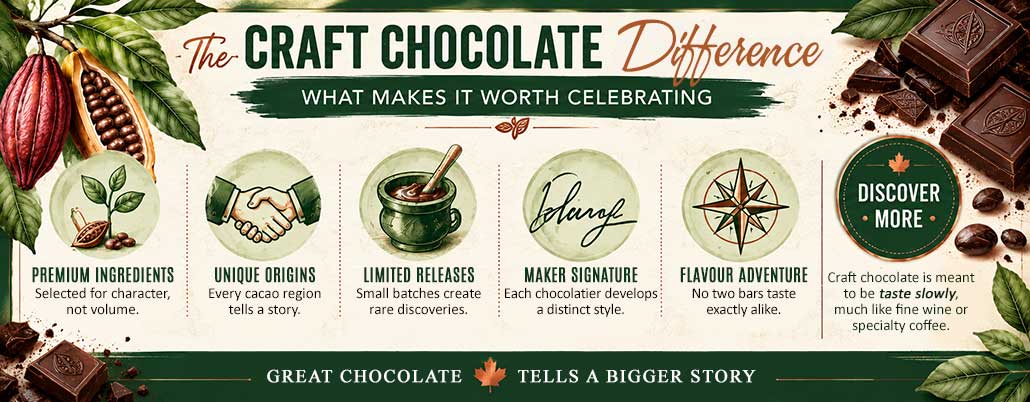
Most bean-to-bar chocolate is produced in relatively small quantities. Small-batch manufacturing allows makers to monitor every stage of production carefully and make adjustments that influence flavour and texture. Roasting profiles, grinding times and conching techniques can all affect the final result.
Because production volumes are lower, chocolatiers often experiment with unique cacao origins, limited-edition releases and creative flavour combinations featuring ingredients such as maple syrup, sea salt, coffee, berries and regional Canadian products.
This attention to detail is one reason craft chocolate continues to attract devoted followers. For many consumers, small-batch production represents quality, authenticity and a closer connection to the maker.
Growing Consumer Demand
The popularity of craft food products has helped fuel interest in premium chocolate. Today’s consumers are increasingly willing to explore products that offer a distinctive story, unique flavour profiles and transparent sourcing practices. They are also becoming more curious about how chocolate is made and what differentiates one product from another.
This growing awareness has created new opportunities for Canadian bean-to-bar makers to educate consumers through tastings, factory tours, workshops and online content.
As a result, many Canadians now approach chocolate in much the same way they approach specialty coffee, wine or craft beer—seeking variety, origin and quality.
Canadian Makers Earning Global Recognition
Canadian bean-to-bar producers have gained attention on the international stage, earning awards and recognition from respected chocolate competitions around the world.
Their international success continues today. In the 2026 International Chocolate Awards Canadian competition, Qantu, Kasama Chocolate, Hummingbird Chocolate Maker and Palette de Bine were among the Canadian bean-to-bar producers earning medals.
Their success reflects not only technical expertise but also a growing appreciation for chocolate as an artisanal food product.
Canada’s Bean-to-Bar Story Is Just Beginning
As consumer interest continues to grow, the future looks promising for Canada’s bean-to-bar community. Greater awareness of ethical sourcing, sustainability and flavour diversity is helping drive demand for premium chocolate experiences. At the same time, Canadian makers continue to innovate while remaining committed to quality and craftsmanship.
The bean-to-bar movement has transformed the way many people think about chocolate. What was once viewed primarily as a confection is increasingly appreciated as a product of agriculture, origin, artistry and careful craftsmanship.
For Canadian chocolate lovers, that means there has rarely been a better time to explore what Canada’s craft makers are creating — one cacao origin and one chocolate bar at a time.